APS Research报告显示,2026年第三季度柬埔寨房
分类房产
事件时间2026-10-13
地点金边
来源Cambodia Investment Review
发布时间2026/10/13 13:31
详情描述
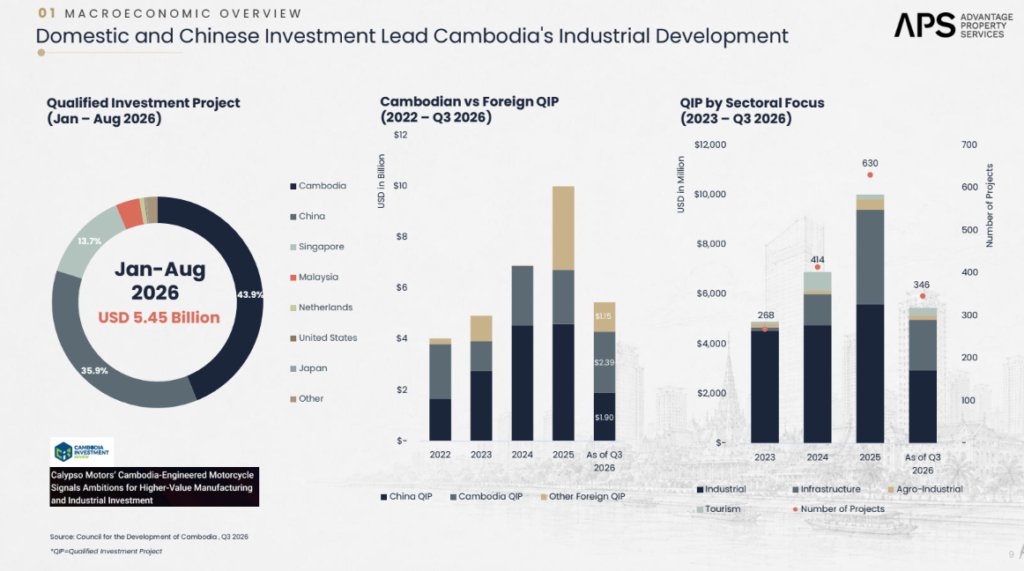
根据柬埔寨投资评论(Cambodia Investment Review)援引APS Research发布的2026年第三季度市场脉搏报告显示,柬埔寨房产市场表现呈现分化态势。制造业投资持续带动工业地产扩张,但住宅价格、商业入驻率及酒店开发仍面临下行压力。
报告指出,市场正出现明显割裂,即出口生产相关地产与依赖家庭消费、外籍需求及国际旅游的板块表现差异扩大。为应对市场环境,开发商及业主正通过缩减新项目规模、提供更灵活的租赁条款以及侧重经济适用型产品进行调整。
在住宅与商业地产方面,高端公寓挂牌价格较上一季度下跌6.7%,甲级服务式公寓租金下滑13.5%。金边办公楼平均入驻率为63.9%,零售空间入驻率为57.1%。住宅市场承压主要受供需失衡及家庭消费能力影响。
工业地产表现则呈上升趋势。成品厂房租金环比增长3.6%,达到每月每平方米2.90美元;经济特区长期土地租赁平均价格上涨1.96%,达到每平方米67.60美元。
APS董事总经理Kinkesa Kim与副董事Kimsea Chea于10月7日发布该报告。分析认为,未来市场复苏程度将取决于具体地段、租户需求以及开发商供需匹配的能力。
📋 简要摘要 ▸
APS Research报告显示,2026年第三季度柬埔寨房产市场表现不均,制造业投资带动工业地产扩张,但住宅价格及商业 occupancy 仍面临下行压力。
📋 完整原文 ▸
[来源: CIR] [分类提示: NEWS]
标题: APS Q3 2026 Update: Cambodia’s Property Market Splits as Industrial Expansion Outpaces Housing and Retail Recovery
Cambodia Investment Review
Cambodia’s real estate market showed an uneven performance in the third quarter of 2026, with manufacturing investment supporting industrial expansion while residential prices, commercial occupancy and hotel development remained under pressure, according to APS Research’s latest Market Pulse report.
The findings point to a widening gap between property linked to export production and segments dependent on household spending, expatriate demand and international tourism. Developers and landlords are adjusting through smaller launches, more flexible leasing terms and a greater focus on affordability.
High-end condominium asking prices fell 6.7% from the previous quarter, while Grade A serviced apartment rents declined 13.5%. Phnom Penh’s average office occupancy stood at 63.9%, and retail occupancy reached 57.1%.
Industrial property moved in the opposite direction. Ready-built factory rents increased 3.6% quarter on quarter to $2.90 per square metre per month, while average long-term special economic zone land lease prices rose 1.96% to $67.60 per square metre over the lease term.
The report, presented on October 7 by APS Managing Director Kinkesa Kim and Associate Director Kimsea Chea, suggests that recovery will depend increasingly on individual locations, tenant requirements and developers’ ability to match supply with demand.
Manuf